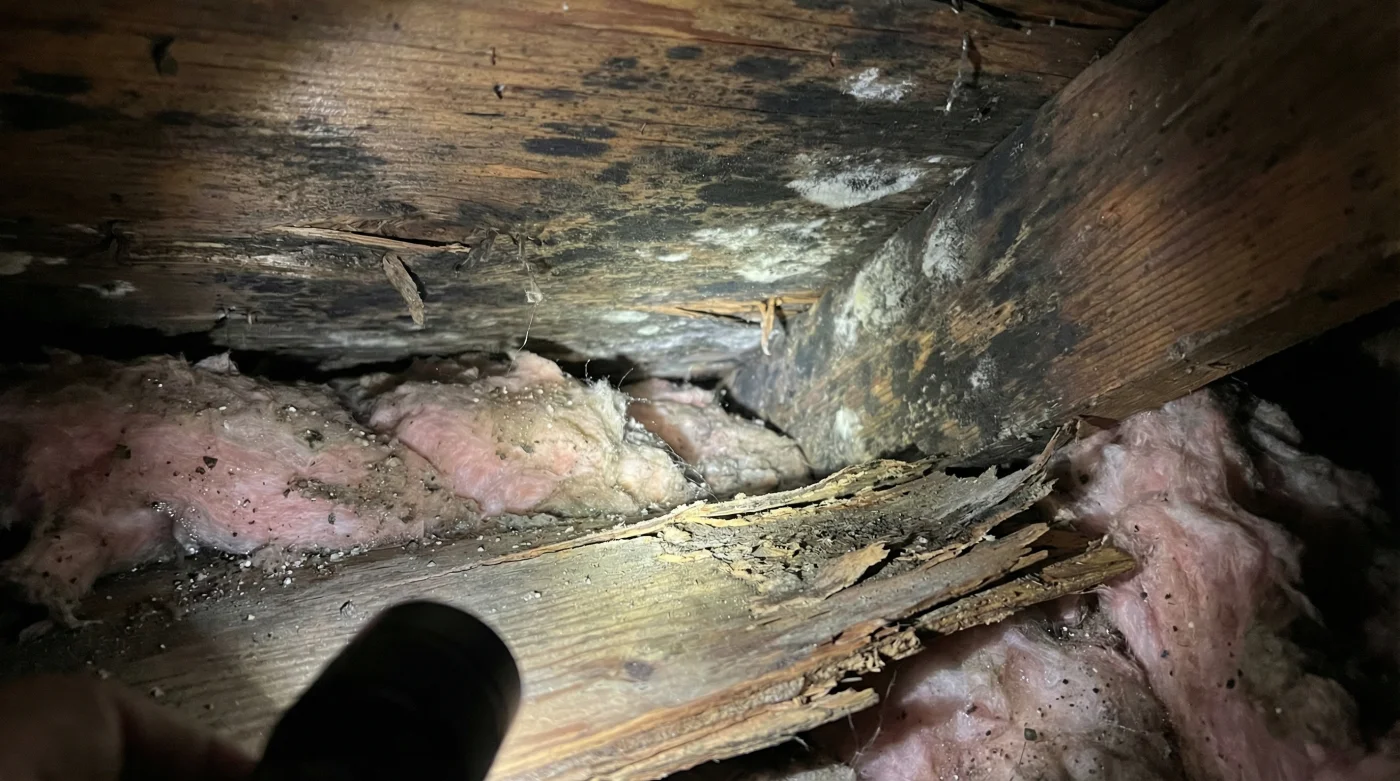
You climb the pull-down ladder into your attic on a crisp November morning, expecting to admire the thick, fluffy mounds of fiberglass you just paid to have blown in. But the air hits you differently. It does not smell like a dry, winter fortress. It smells like a damp, heavy root cellar. You point your flashlight up at the roof decking, and there it is—the stark visual outcome of a good intention gone terribly wrong. The once-crisp amber wood is weeping. Black, fuzzy spots of mould are blooming across the plywood sheathing, and the nails are dripping with condensation. You spent thousands keeping the cold out, but right now, your house is quietly sweating to death.
The Suffocating Blanket
A house needs to exhale. When you pack fresh insulation tight into the lowest corners of your roofline, you inadvertently block the soffits—the vital intake vents sitting under your eaves that allow outside air to sweep upward. Think of it like running ten miles in a heavy winter parka while breathing through a pillow. The heat and moisture radiating from your daily showers, cooking, and living spaces eventually migrate upward. When that warm, humid air hits a freezing roof deck with nowhere to go, it immediately turns back into water.
The friction here is agonizing for homeowners: the exact energy upgrade you bought to protect your home is the very thing rotting its structural bones. But you do not have to choose between a warm house and a dry roof. The critical payoff lies in a cheap, aggressively overlooked piece of plastic: the rafter baffle. This simple chute physically holds the insulation back, securing a permanent, dedicated airway from the soffit to the roof ridge.
Years ago, Elias, a veteran roof restorer from outside Winnipeg, dragged me up into a client’s attic to show me the aftermath of an overzealous insulation job. “People think escaping heat is the enemy,” he muttered, scraping a screwdriver across a punky, blackened truss that crumbled like wet cardboard. “Stagnant air is the enemy. You choke the airflow at the edges, you kill the roof.” He pulled out a piece of ridged foam. “You staple these baffles against the underside of the roof decking right where the roof meets the floor. The house keeps its thick winter coat, but the attic gets the draft it needs to stay bone dry.”
| Homeowner Profile | The Unseen Danger | The Baffle Benefit |
|---|---|---|
| The Eager DIYer | Shoving batts tight against the eaves to maximize R-value, entirely cutting off fresh air. | Provides a fool-proof physical barrier that prevents accidental over-stuffing. |
| The Frugal Renovator | Skipping baffles to save $50 on materials, risking a $15,000 roof replacement in five years. | Extends the lifespan of asphalt shingles by preventing ice dams and deck rot. |
| The Historic Homeowner | Adding modern vapour barriers and heavy insulation to a house that was built to ‘leak’ air naturally. | Restores the necessary atmospheric equilibrium an older home requires to shed moisture. |
The Physics of a Sweating Roof
To understand why this happens, you have to look at the math of trapped air. When your attic is completely isolated from outside airflow, the internal climate shifts dramatically. Baffles maintain the necessary thermal bridge.
| Attic Condition | Outside Temp | Inside Attic Temp | Condensation Risk |
|---|---|---|---|
| Blocked Soffits (No Baffles) | -15 Celsius | +2 Celsius | Severe. Moisture turns to frost on the wood, melting into rot during the day. |
| Properly Baffled Soffits | -15 Celsius | -12 Celsius | Zero. The attic stays cold and dry, matching the exterior ambient air. |
Practical Application: Restoring the Lungs of Your Home
Fixing this is a physical, tactile process. You will need a staple gun, a headlamp, a protective mask, and a stack of plastic or foam baffles from your local hardware store. Wait for a cool, dry day to do this work.
Crawl carefully toward the low edges of your roof where the ceiling joists meet the rafters. Use a garden rake or your gloved hands to pull the existing insulation back about six inches from the soffit vents. You should suddenly see daylight from outside, or at least feel a rush of crisp, cold air hitting your face.
- Bathroom exhaust fans ignite ceiling insulation without this annual vacuuming routine.
- Landscaping river rocks cost pennies purchasing directly from local aggregate quarries.
- Popcorn ceilings hide completely beneath stretched canvas and temporary tension rods.
- Brass hardware restores perfectly using standard household tomato ketchup acid.
- Contaminated gasoline ruins winter snowblowers across Ontario rural storage sheds.
Once the baffle is anchored, gently push the insulation back against it. The insulation can rest snugly against the plastic, but the tunnel itself remains open. Repeat this in every rafter bay that contains a soffit vent.
| Installation Element | What to Look For (Quality Standard) | What to Avoid (Failure Risk) |
|---|---|---|
| Material Choice | Rigid PVC or extruded polystyrene that won’t crush under heavy blown-in cellulose. | Flimsy cardboard variants that can absorb ambient moisture and sag over time. |
| Placement Depth | Baffles pushed all the way down to hover just above the exterior soffit perforations. | Stopping short of the exterior wall top plate, allowing insulation to spill under the baffle. |
| Fastening Method | Heavy-duty 3/8-inch staples driven every few inches along the top flange. | Relying on the insulation’s weight to hold the baffle in place; it will eventually shift. |
The Rhythm of a Breathing House
When you finish, you will climb back down the ladder covered in dust and sweat. But the next time the temperature drops to a bitter, biting cold, you will not have to worry about what is happening above your ceiling. Your home is a living system. It needs to pull crisp air through its eaves and exhale the stale warmth out through the roof vents. By giving your insulation a rigid boundary, you have stopped fighting the architecture. You have given your home its lungs back, ensuring the wood stays dry, the heat stays contained, and the roof above your head stands strong for decades.
“The most expensive insulation mistake you can make is forgetting that a warm house relies on a freezing cold attic to survive the winter.”
Frequently Asked Questions
Do I need a baffle in every single rafter bay?
You only strictly need them in the bays that have a vented soffit below them, but installing them in every bay guarantees maximum, uninterrupted air circulation across the entire roof deck.Can I install baffles after the insulation is already blown in?
Yes, though it is messy. You must carefully rake the insulation back from the eaves, slide the baffles into place against the decking, and then pull the insulation back over them without crushing the channels.How do I know if my soffits are already blocked?
Look for uneven snow melt on your roof, the formation of large ice dams at the gutters, or a musty smell and visual black spotting on the underside of your roof decking.Are foam or plastic baffles better for a Canadian climate?
Rigid plastic (PVC) is generally superior because it will not become brittle in extreme cold or compress under the heavy weight of upgraded R-60 cellulose insulation.Does allowing cold air into the attic defeat the purpose of adding insulation?
Not at all. The insulation sits on your attic floor, keeping the heat inside your living space. The cold air flowing above the insulation keeps the roof deck cold, which prevents condensation and ice dams.