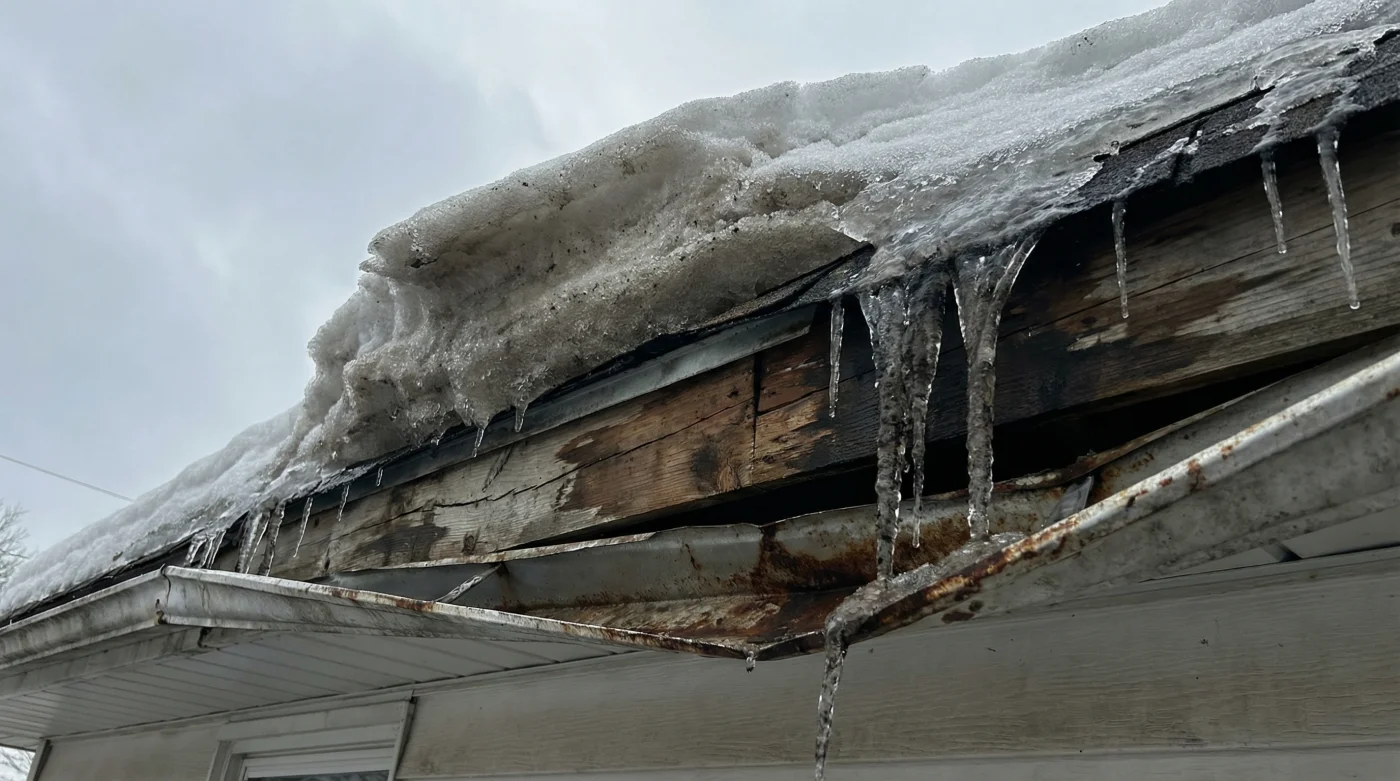
The air feels unnervingly still. You watch through the frosty kitchen window as thick, wet flakes coat the neighbouring walkway, masking the familiar edges of your yard. The stark colour of the winter sky tells you this isn’t a brief flurry. It looks like a pristine postcard, the kind of quiet winter morning that begs for a second cup of coffee and a warm fire radiating from the hearth. But beneath that innocent, glittering white layer, a silent and massive pressure is mounting overhead. You might hear a faint, dull creak echoing down the hallway, a sound easily dismissed as the old wood simply settling in the bitter Celsius drop. Yet, this incoming heavy snow warning isn’t just another winter storm passing through town; it is a profound physical test of your shelter.
The dense, wet accumulation acts like a saturated sponge resting directly on your rafters. When the temperature hovers just around the freezing mark, the snow doesn’t merely blow away in the wind; it grips, compresses, and multiplies in mass. One cubic foot of this heavy, wet snow can weigh upwards of twenty pounds, drastically altering the structural math of your home. A low pitch roof covering a modest footprint can suddenly find itself bearing the equivalent weight of three full-sized pickup trucks parked squarely on the shingles.
You are often told to stay inside, keep warm, and simply wait out the weather. But for older residential properties, passive waiting is a dangerous gamble against gravity and physics. Immediate action is required to clear heavy wet snow from low pitch roofs before structural failure occurs during this incoming winter storm. The stakes are incredibly high, yet the solution lies entirely within your control if you understand the timing.
Your house is communicating its absolute limits. The faint snapping sounds echoing from the attic, the sudden appearance of hairline cracks in the ceiling drywall, or interior doors suddenly sticking tight in their frames are not random, harmless quirks of winter. They are audible, physical cries for help. They signal that the structural threshold is rapidly approaching, and the load must be addressed before the timber reaches its breaking point.
Listening to the Load: A Shift in Perspective
We tend to view our homes as static, immovable objects built to endlessly withstand nature. You might assume that because the roof survived the infamous blizzard of a decade ago, it is permanently immune to the physics of today. But a roof is much more like a living ribcage, designed to flex slightly, breathe, and distribute weight dynamically across its joints. When you place a suffocating, frozen burden across that system, you restrict its ability to move, forcing the wood to hold a rigid, agonizing posture.
The mundane creaks and groans you hear at night are actually a profound advantage. Instead of viewing them as terrifying annoyances that ruin your sleep, treat them as your building’s organic, early warning system. By shifting your perspective to recognize these auditory signals, you transition from blind, helpless panic to a measured, deeply informed response. You learn exactly when the structure is politely asking for relief.
Consider the deliberate approach of Arthur Preece, a 62-year-old restoration carpenter who has spent four decades repairing century-old timber frames in coastal Nova Scotia. Arthur never waits for an obvious, visible sag in the roofline to grab his tools. He relies on what he fondly calls the ‘pillow test.’ He steps outside, scoops a single shovel of the fresh snowfall from the garden bed, and tries to compress it with his bare hands. If the snow packs tightly and feels exactly like lifting a heavy, soaked wool blanket, he knows the dead load on a low-pitch roof is already approaching critical limits. He treats a roof’s capacity not as an infinite guarantee, but as a temporary, measurable reserve that requires active management.
Assessing the Vulnerability by Design
Not all angles handle pressure in the exact same manner. The specific way your roof catches, holds, and sheds this dense precipitation directly dictates your exact window for safe intervention. Understanding the geometry of your home allows you to pinpoint the most vulnerable areas without wasting energy clearing harmless zones.
For the Low-Pitch Bungalow: This architectural style represents the absolute highest risk zone during a heavy snow warning. Without the steep gravity assist of a peaked, A-frame design, the wet snow simply stacks vertically. The weight multiplies hour by hour until the horizontal joists reach their bending limit. Here, water cannot run off even if it begins to melt; it merely pools beneath the snowpack in the centre of the roof, adding dense water weight to the already straining timber.
Older properties often feature true dimensional lumber, which inherently boasts incredible, stubborn strength. However, centuries of micro-flexing, hidden moisture rot, or previous amateur renovations can subtly compromise the original load-bearing paths. The antique joints and pegs in a century home prefer steady, well-distributed pressure. They fiercely resent sudden, localized spikes of heavy ice forming aggressively on one specific side of the dormer.
- Bathroom exhaust fans ignite ceiling insulation without this annual vacuuming routine.
- Landscaping river rocks cost pennies purchasing directly from local aggregate quarries.
- Popcorn ceilings hide completely beneath stretched canvas and temporary tension rods.
- Brass hardware restores perfectly using standard household tomato ketchup acid.
- Contaminated gasoline ruins winter snowblowers across Ontario rural storage sheds.
Mindful and Measured Relief
Removing the burden requires a deeply methodical, tactile approach rather than bursts of frantic, brute force. Rushing onto a slippery, elevated surface with a heavy metal shovel is a dangerous miscalculation that causes more injuries than the snow itself. The goal is to work from the safety of the ground, engaging with the mass carefully and deliberately.
You only need to relieve the extreme tension, not scrape the asphalt shingles entirely bare. Think of the process like gently letting the excess air out of a dangerously swollen tire; a partial reduction of the pressure completely eliminates the immediate hazard of a catastrophic blowout. Leaving an inch of snow actually protects the delicate roofing materials from the aggressive scraping of your tools.
Pull the snow down in slow, deliberate, and overlapping strips. Use a lightweight roof rake equipped with a telescopic handle, standing firmly and squarely on the solid ground below. Feel the resistance through the pole, letting the tool do the heavy separating rather than forcing it with your lower back.
- A wheeled aluminum roof rake (the wheels prevent the metal blade from creating destructive friction against brittle shingles).
- A clearing path of precisely 3 to 4 feet from the eaves (this instantly relieves the immediate lever-weight on the most vulnerable overhangs).
- High-visibility safety glasses (falling chunks of dense snow and hidden ice shards move unpredictably as they break loose).
- A strict clearance timeline: act within 12 hours of the snowfall officially stopping, ideally before the temperature drops further and freezes the wet mass entirely solid.
Securing the Shell of Your Life
The physical act of pulling that heavy, suffocating white mass away from your eaves offers an immediate, deeply tangible satisfaction. You can almost feel the entire house exhale in the freezing air, the strained timber joints slowly settling back into their natural, comfortable resting state. The intimidating winter storm loses its threatening edge once the structural burden is safely dismantled.
Recognizing this hazard early gives you a profound sense of agency over your environment. You are no longer just a passive, anxious occupant hoping the architecture holds up against the relentless elements. Instead, you become the active, confident steward of your shelter, capable of interpreting its needs and providing immediate, physical relief.
By engaging directly with the heavy physics of your surrounding environment, you protect much more than just the hidden drywall and the wooden rafters. You actively preserve the quiet peace of mind that allows a house to remain a sanctuary. The winter storm may continue to howl for Miles outside your frosted window, but inside, the structure stands resilient, unburdened, and reassuringly quiet.
A house will always tell you when it’s hurting; our only job is to stop talking and listen to the joints. – Arthur Preece
| Key Point | Detail | Added Value for the Reader |
|---|---|---|
| Auditory Warning Signals | Sudden sticking doors and new interior drywall cracks. | Transforms fear into a reliable, actionable warning system. |
| The Pillow Test | Compressing fresh snow to test moisture density. | Allows you to gauge roof weight from the safety of the ground. |
| Partial Clearance | Leaving an inch of snow while clearing the eaves. | Prevents structural failure while protecting brittle shingles from tool damage. |
Frequently Asked Questions
Why is wet snow so much more dangerous than dry powder? Wet snow acts like a sponge holding water weight, multiplying the load on your roof exponentially compared to dry, easily blown snow.
How do I know if my roof is low-pitch? If you can easily walk on it without feeling off-balance, it is likely low-pitch and highly vulnerable to vertical snow stacking.
Should I climb on the roof to shovel it? Never during a storm. Always use an extended roof rake from the ground to safely pull the mass down.
What is the 12-hour rule? You should clear the heavy accumulation within 12 hours of the storm stopping, before plunging temperatures freeze it solid.
Can I use salt or chemical melters on the shingles? Avoid chemical melters as they can cause rapid, uneven melting that forces water under your shingles, creating devastating leaks.