It happens on a Tuesday morning in late January. The wind chill outside is sitting at a bitter minus twenty Celsius. You step into the shower, anticipating that familiar, enveloping rush of heat to wake you up. Instead, a tepid, almost chalky-smelling stream hits your shoulders. Confused, you head down to the basement. There, pooling across the cold concrete floor toward the drain, is a slow, steady leak. The steel belly of your water heater has given out.
Most of us accept this as an inevitability. We treat water heaters like lightbulbs with a fixed, ten-year expiration date. But a tank does not rust simply because it gets old. It fails because we ignore the most selfless piece of engineering hiding just beneath the surface.
The Myth of the Ten-Year Lifespan
The inside of your hot water tank is a slow-motion banquet. Heated water is naturally corrosive; it wants to consume the steel walls holding it. To prevent this, manufacturers install a sacrificial lamb—a rod made of soft metal that sits suspended in the dark. It is a brilliant, silent negotiation with chemistry.
| Homeowner Profile | The Core Benefit of Anode Replacement |
|---|---|
| The Budget Protector | Saves upwards of $1,500 in premature tank replacement and emergency plumbing fees. |
| The Weekend Tinkerer | Transforms a catastrophic failure into a predictable, satisfying 30-minute mechanical task. |
| The Long-Term Planner | Prevents catastrophic water damage to finished basement floors and stored heirlooms. |
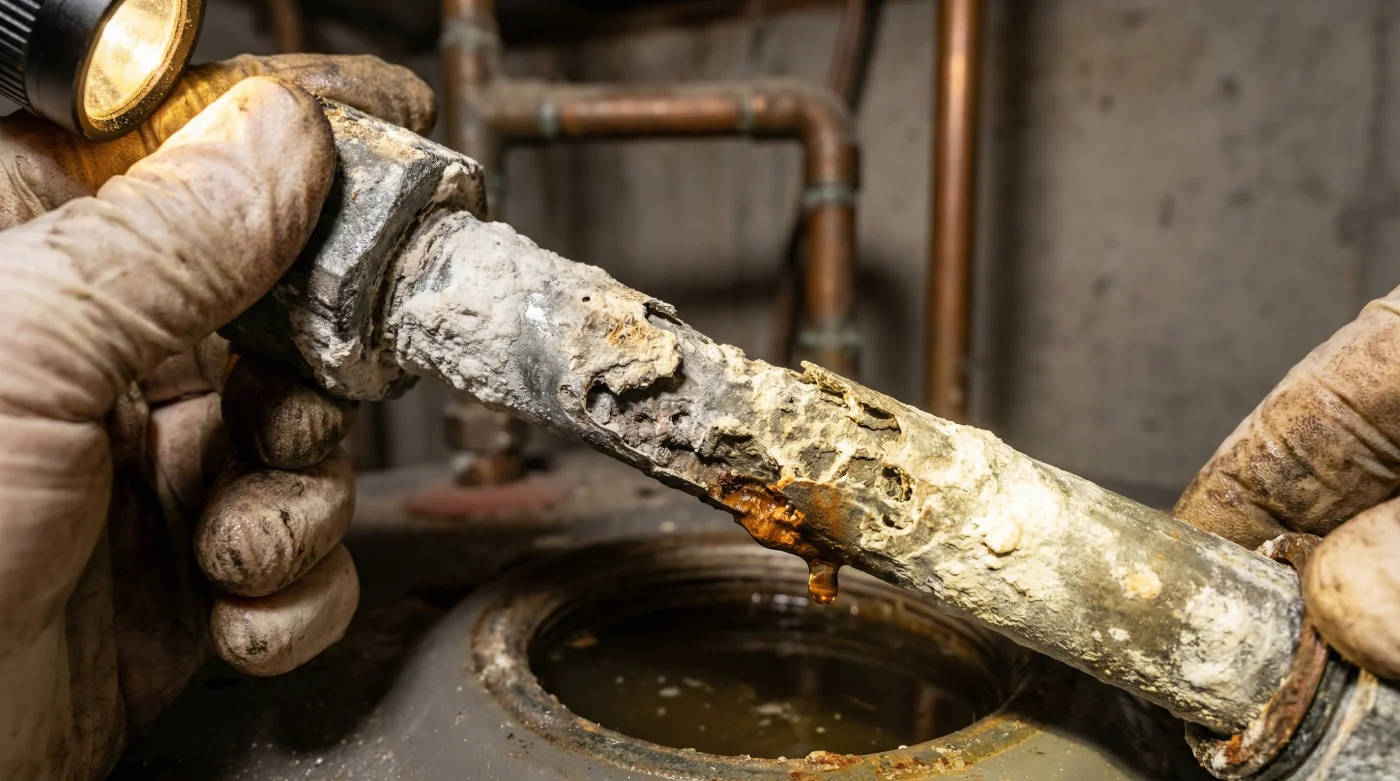
I learned this the hard way years ago from a seasoned local plumber in Winnipeg named Gord. He had forearms like cured ham and a tool belt that looked older than I was. We were standing over my ruined tank when he unthreaded a hexagonal nut at the top and pulled out a thin, jagged wire covered in what looked like chewed-up bone.
“People think the water eats the tank,” Gord told me, wiping grease from his hands. “It doesn’t. The water eats the anode rod. But once this rod is gone, the water turns on the steel. Replacing the magnesium anode rod every three years prevents the tank wall from rusting out.”
| Anode Material | Water Condition | Scientific Logic & Technical Specs |
|---|---|---|
| Magnesium | Normal / Soft Water | Generates a stronger electrical current, offering superior protection. Dissolves faster than other metals. |
| Aluminum | Hard Water | More durable in harsh water conditions. Best if your water has high mineral content. |
| Aluminum/Zinc Alloy | Well Water (Sulfur) | The zinc neutralizes the bacteria that causes water to smell like rotten eggs. |
The Three-Year Ritual
Swapping out this rod sounds like heavy-duty mechanical work, but it is surprisingly straightforward. It requires a bit of leverage, a socket wrench, and a quiet afternoon. First, you cut the energy. Flip the breaker if it is electric, or turn the dial to ‘Pilot’ if it is gas. You are pausing the system, letting the beast rest.
Next, shut off the cold water supply valve at the top. Connect a garden hose to the spigot at the bottom of the tank and open it slightly. You only need to drain out a few buckets’ worth to bring the water level below the top of the tank.
Now comes the physical part. Locate the hex head on top of the heater. It is often hidden under a plastic cap or a patch of foam insulation. You will need a 1-1/16 inch socket and a long breaker bar. The factory tightens these rods with immense torque. Plant your feet, grip the bar, and apply steady, firm pressure until you feel the satisfying ‘pop’ of the threads breaking loose.
| Quality Checklist | What to Look For | What to Avoid |
|---|---|---|
| Rod Type | Segmented rods (link-style) if your basement ceiling is too low to lift a 4-foot solid rod straight up. | Forcing a solid rod to bend during installation, which weakens the internal steel core. |
| Thread Sealant | Applying 4 to 5 wraps of heavy-duty Teflon tape to the threads before installation. | Skipping the tape or using liquid pipe dope, which can interfere with the electrical continuity. |
| Torque | Tightening until snug and firm with a standard socket wrench. | Using an impact wrench, which can easily damage the tank threads or crack the glass lining. |
- Bathroom exhaust fans ignite ceiling insulation without this annual vacuuming routine.
- Landscaping river rocks cost pennies purchasing directly from local aggregate quarries.
- Popcorn ceilings hide completely beneath stretched canvas and temporary tension rods.
- Brass hardware restores perfectly using standard household tomato ketchup acid.
- Contaminated gasoline ruins winter snowblowers across Ontario rural storage sheds.
Close the drain valve. Turn the cold water supply back on. Go upstairs and open the hot water tap in your kitchen to let the trapped air spit and hiss its way out of the pipes. Once the water runs smooth, restore the power or gas.
Finding Peace in the Utility Room
We spend so much time curating the living spaces of our homes—the paint colours, the fabric textures, the lighting in the centre of the room. But true comfort rests on a foundation of quiet, maintained utilities. When your basement is dry and your shower is reliable, your home feels like a sanctuary.
Taking thirty minutes every three years to swap out a simple piece of metal might seem trivial. Yet, this is the 5-minute fix that prevents a flooded basement, saving you thousands of dollars and the heartache of ruined possessions. You are no longer just a resident reacting to emergencies. You are the custodian of the home’s beating heart, ensuring it stays warm and resilient against the cold.
“A house only deteriorates when we stop listening to the quiet mechanisms that keep it alive.”
Frequently Asked Questions
How do I know if my anode rod is completely depleted?
If you pull it out and see more than six inches of bare steel wire exposed, or if it has thinned out to less than half an inch in diameter, it is time for a replacement.Can I use an impact driver to remove a stubbornly stuck rod?
It is highly discouraged. The violent hammering action can fracture the glass lining inside your tank. Use a breaker bar and steady, manual leverage instead.Why does my hot water smell like rotten eggs?
This is a reaction between sulfur bacteria in your water and a magnesium anode rod. Switching to an aluminum-zinc alloy rod usually eliminates the odour entirely.Do I need to turn off the water to the whole house?
No. You only need to close the dedicated cold water shut-off valve located directly above the water heater.Are segmented rods just as good as solid ones?
Yes. Segmented (or flexible) anode rods offer the exact same galvanic protection but are designed specifically for basements or closets with limited overhead clearance.