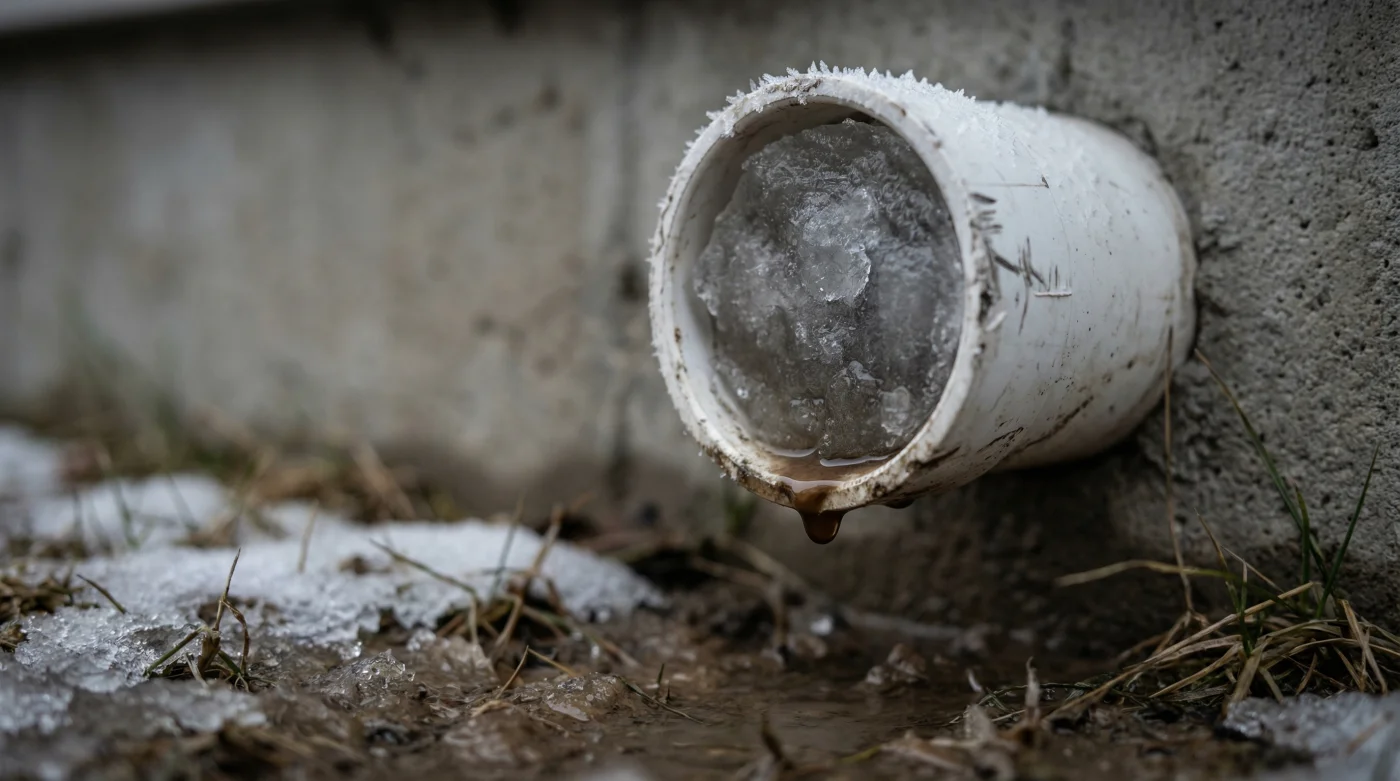
You hear it before you see it. That low, persistent groan echoing from the basement stairs on a late March morning. The spring melt has arrived, turning the snowbanks in your yard into heavy, grey slush. Down below, your sump pump clicks on, humming with what sounds like reassuring power. But then, the pitch shifts. It changes from a steady purr to a strained, frantic whine. The smell of damp concrete rises to meet you, carrying the sudden, sinking realization that water is no longer moving.
The Anatomy of a Clamped Vein
You probably assume that a plugged-in, active pump equals a protected basement. That is the routine error most homeowners make. You trust the hardware sitting in the pit, completely forgetting the journey the water takes once it leaves the safety of your home. Imagine a heart pumping furiously against a clamped vein. That is exactly what happens when daytime temperatures reach a balmy five Celsius, melting the yard snow, only to plummet to minus eight Celsius overnight.
The water resting inside your exterior discharge pipe freezes solid. Your pump pushes against an immovable wall of ice. The motor runs hot, struggling against the blockage, until it eventually burns out or the water simply overflows the pit. This is the unseen vulnerability of Canadian winters.
| Home Environment | Specific Spring Threat | The Relief Valve Benefit |
|---|---|---|
| Older urban homes with minimal yard grading | Water pools near the foundation, causing rapid freeze-thaw cycles inside the pipe. | Provides immediate pressure release before water backs up into the basement. |
| Suburban lots with buried discharge lines | Snow drifts insulate the ground, but exposed pipe ends freeze shut overnight. | Bypasses the frozen yard exit entirely, venting right at the house wall. |
| Rural properties with long surface hoses | Long hoses trap water, creating miles of solid ice blockages during cold snaps. | Prevents the pump motor from dead-heading and burning out against the ice. |
Gord, a veteran pipefitter from just outside Ottawa, once handed me a shattered piece of Schedule forty PVC while we stood in a flooded recreation room. “People buy the strongest pumps on the market,” he said, wiping purple pipe cement from his calloused hands. “But water expands by nine percent when it turns to ice. It doesn’t care about your half-horsepower motor.”
Gord taught me that the secret to a dry basement is not a bigger, louder machine. It is a freeze-relief valve. This is a simple, vented plastic fitting installed just outside the house. When the main line chokes with winter ice, the water forcefully spills out of these vents instead of backing up into your living space. It breathes through the vents, relieving the pressure instantly.
| Environmental Condition | Pipe Reaction | Mechanical Result |
|---|---|---|
| Daytime thaw (+4 Celsius) | Water flows freely through the entire discharge length. | Normal pump operation; water exits safely away from the home. |
| Overnight freeze (-10 Celsius) | Residual water inside the horizontal pipe freezes and expands. | Pipe becomes completely obstructed; a solid ice plug forms. |
| Pump activation against ice | Water pressure builds behind the ice plug with nowhere to go. | Without a relief valve, the water flows backward, flooding the pit. |
Installing the Winter Bypass
- Bathroom exhaust fans ignite ceiling insulation without this annual vacuuming routine.
- Landscaping river rocks cost pennies purchasing directly from local aggregate quarries.
- Popcorn ceilings hide completely beneath stretched canvas and temporary tension rods.
- Brass hardware restores perfectly using standard household tomato ketchup acid.
- Contaminated gasoline ruins winter snowblowers across Ontario rural storage sheds.
Using a standard hacksaw, cleanly cut out a section of the PVC pipe to fit your new freeze-relief fitting. Keep your cuts as straight as possible. Sand the rough burrs off the cut edges with a piece of medium-grit sandpaper so the plastic dust does not interfere with the watertight seal. Wipe the pipe clean.
Apply your purple primer to both the pipe and the inside of the fitting, followed quickly by your PVC cement. Slide the freeze-relief valve into place, ensuring the open vents are pointing slightly away from the siding of your house. Hold the pieces firmly together for thirty seconds while the chemical weld sets and cures.
That is the entire, five-minute process. If the line further down the yard freezes solid beneath a hardened snowdrift next week, the water will simply jet out of these vents. Your basement stays dry, and your pump survives the season.
| Component Feature | What to Look For | What to Avoid |
|---|---|---|
| Material Grade | Thick, Schedule forty PVC that matches your existing exterior pipe. | Thin, brittle plastics that will shatter upon impact or extreme cold. |
| Vent Design | Wide, angled vents that direct overflowing water away from the wall. | Narrow slits that can easily get clogged by blowing autumn leaves or mud. |
| Connection Type | Smooth slip joints designed for chemical solvent welding. | Threaded connections that require Teflon tape, which can leak under high pressure. |
A Quiet Spring
Spring in Canada should feel like a welcome relief, a thawing of the world, rather than a looming threat to your finished basement. By adding this simple bypass valve, you change the way you interact with your home. You no longer have to wake up in the middle of the night, listening anxiously for the strained groan of a dying motor.
You give the moving water a secondary, guaranteed escape route. This small physical modification acknowledges the harsh reality of our climate and adapts to it elegantly, rather than fighting a losing battle against the expanding ice. You can finally sleep through the unpredictable temperature swings of March and April.
Ultimately, home maintenance is about recognizing the bottlenecks in your systems and giving them room to breathe. When you step back and look at that small vented piece of plastic, you are looking at peace of mind. You trust that the system will handle whatever the melting snow brings.
“A pump is only as reliable as its exit route; give the water a place to go when the cold fights back, and the machinery will take care of the rest.” — Gord MacIntyre, Master Plumber
Frequently Asked Questions
Will the water spilling from the vents pool against my foundation? Yes, it can, which is why this is an emergency bypass. It is far better to manage a small amount of water near the exterior wall than to deal with a fully flooded basement interior.
Can I install this on an older black corrugated pipe? You will need to adapt the flexible corrugated pipe to a rigid PVC section right at the house exit in order to securely attach the relief valve.
How much does a freeze-relief valve typically cost? They usually run between twenty and forty dollars at your local Canadian hardware store, which is a fraction of the cost of replacing a burned-out pump.
Do I need to cover the vents during the summer months? No, you should leave them open year-round. They double as a handy overflow if the underground line ever gets clogged with yard debris or roots.
How do I know if my underground line is currently frozen? If your pump runs continuously but the water level in the basement pit does not drop, your line is almost certainly obstructed by an ice plug outside.