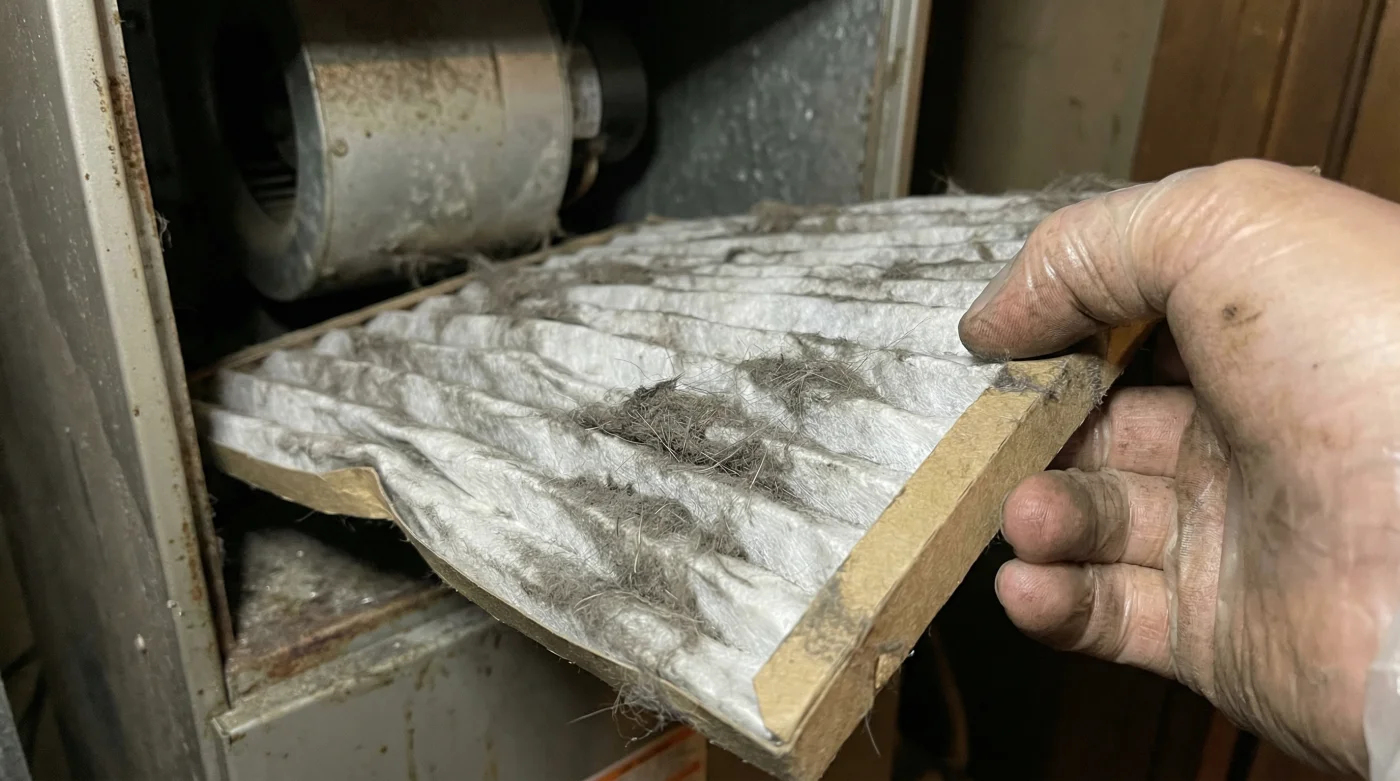
It usually starts with a subtle shift in the soundscape of your home. You are sitting in the living room on a late January evening, the window panes cold against the biting Canadian winter, and you notice the hum from the basement. It is not the familiar, reassuring rush of warm air. It is a strained, high-pitched whine echoing through the floorboards, accompanied by the faint, metallic scent of an overworked motor.
You check the thermostat. The house is hovering at 18 Celsius, though you set it to 21 hours ago. The air coming from the registers feels weak, almost apologetic. You might assume your furnace is simply old, or that the harsh weather is finally winning. But the culprit is likely sitting exactly where you put it, silently suffocating your entire heating system.
The Asthma Myth and the Breathing House
We are sold a compelling narrative about indoor air quality. The promise is that buying the thickest, most densely pleated filter at the local hardware store will trap every speck of pet dander, pollen, and dust, leaving your home feeling like an alpine retreat. You grab the premium MERV 13 or 14 option, assuming higher numbers equate to better care for your family.
But a house is a breathing organism, and it relies on a delicate balance of circulation. Putting a restrictive, high-MERV filter on a standard residential furnace is like trying to run a five-kilometre race while breathing through a heavy wool scarf. You might not inhale any street dust, but your lungs will scream, and eventually, you will collapse. Your furnace operates on the same logic. It needs a specific volume of return air to push heated air throughout your home. When you choke that intake, the blower motor has to work twice as hard to pull air through the dense fabric.
| Homeowner Profile | The Common Mistake | The Optimal Filter Strategy |
|---|---|---|
| The Pet Owner | Buying MERV 13 to trap all hair, suffocating the system. | Use MERV 8 and vacuum floors more frequently. |
| The Allergy Sufferer | Relying on the furnace to act as a whole-home air purifier. | Buy a cheap fiberglass filter for the furnace; use standalone HEPA units in bedrooms. |
| The Old-Home Resident | Using dense filters to catch plaster dust and drafts. | Change a $5 filter monthly to maintain steady, warm airflow. |
I learned this lesson the expensive way. After my furnace shut down on the coldest night of the year, I called an HVAC technician named Dave, a veteran from Manitoba who has seen more burnt-out blowers than prairie snowstorms. Dave walked into my basement, pulled out my heavy, grey-pleated premium filter, and shook his head.
“Your furnace is suffocating,” he said, holding up the dense, dust-caked square. He then walked to his truck and handed me a flimsy, spun-fiberglass filter. You could see right through it. “Your furnace filter is not there to clean the air for your lungs. It is there to protect the blower motor from large debris, like dog hair and carpet fibres.”
| MERV Rating | Airflow Resistance (Static Pressure) | Risk to Blower Motor |
|---|---|---|
| 1 – 4 (Fiberglass) | Very Low | None. Allows the motor to glide effortlessly. |
| 5 – 8 (Pleated) | Moderate | Minimal, provided it is changed every 60 days. |
| 11 – 14 (Premium Pleated) | High to Extreme | Severe. Drastically reduces motor lifespan and increases energy bills. |
The Five-Dollar Fix
This is where the $5 fix comes into play. It contradicts almost everything the packaging in the home improvement aisle tells you, but it will save your HVAC system from an early, expensive death.
Stop buying the premium filters. Switch to the cheap, flat, fiberglass alternatives—the ones that cost around five dollars and look like a web of blue or green cotton candy. These filters provide virtually zero resistance. They catch the large particles that would actually damage your furnace’s internal components, but they let the air pass freely.
- Bathroom exhaust fans ignite ceiling insulation without this annual vacuuming routine.
- Landscaping river rocks cost pennies purchasing directly from local aggregate quarries.
- Popcorn ceilings hide completely beneath stretched canvas and temporary tension rods.
- Brass hardware restores perfectly using standard household tomato ketchup acid.
- Contaminated gasoline ruins winter snowblowers across Ontario rural storage sheds.
| Filter Attribute | What to Look For (The Good) | What to Avoid (The Bad) |
|---|---|---|
| Material Density | Translucent spun fiberglass or wide-wire mesh. | Dense, tightly woven synthetic microfibers. |
| Pleat Count | None (flat panel) or very few, wide pleats. | High-density micro-pleats designed for maximum allergen trapping. |
| Price Point | Under $10 per unit (buy them in bulk). | $25 to $30 single-pack maximum protection boxes. |
If you genuinely struggle with seasonal allergies or asthma, the solution is not to turn your furnace into a giant HEPA filter. Buy standalone air purifiers for the rooms where you spend the most time, like the bedroom or the living room. Let those specialized, small-scale motors do the heavy lifting of scrubbing the air, and let your furnace focus on what it was built to do: moving warm air efficiently.
The Bigger Picture
There is a quiet peace of mind that comes with understanding the mechanical rhythm of your home. We often complicate our maintenance routines because marketers convince us that more expensive, highly engineered solutions are always superior.
Swapping out a dense filter for a simple, five-dollar fiberglass square is a physical act of letting go of that pressure. It is a return to basics. You are no longer forcing an appliance to perform a job it was never designed to do. Instead, you are working with the machine, respecting its limits, and extending its life.
The next time you walk down the furnace filter aisle, bypass the colourful displays promising medical-grade air purity. Grab the cheap, see-through blue squares. Listen to the effortless rush of air from your vents tonight, and know that you just saved yourself a thousand-dollar repair bill.
“A furnace filter is designed to protect the equipment, not the people living inside the house.”
Frequently Asked Questions
Will a cheap fiberglass filter leave my house incredibly dusty?
Not noticeably. While they do not catch microscopic dust, regular vacuuming and dusting are far more effective at keeping your home clean than relying on your furnace.How often should I change a $5 fiberglass filter?
During the peak of winter or the height of summer, check and replace it every 30 days. Because they are cheap, keeping a stack by the furnace makes this an easy habit.Are higher MERV ratings ever appropriate?
Yes, but only if your HVAC system was specifically designed or modified by a professional to handle the increased static pressure, usually involving a larger blower motor and wider ductwork.Can a restrictive filter actually increase my heating bill?
Absolutely. When the blower motor struggles to pull air, it runs longer and consumes significantly more electricity to heat the same square footage.What if my filter gets sucked into the ductwork?
If your filter is bending or collapsing, the static pressure is too high. A proper-fitting fiberglass filter in a well-functioning system will stay perfectly in place without bowing.