You know the sound. It usually starts at 2:00 a.m. when the house is finally still. The baseboard radiators might be clicking as the furnace pushes heat through the vents, and outside, the winter air has settled over the neighbourhood. But inside, there is a faint, relentless hiss echoing against the cold porcelain of your bathroom. It is followed by the sudden, ghostly rush of a tank refilling itself. You lie there in the dark, staring at the ceiling, calculating the litres of fresh tap water quietly slipping down the drain. You picture your next municipal utility bill climbing higher by the hour, eating into your monthly budget. It is a creeping frustration, the kind that makes you want to ignore the problem until the weekend. You assume you will have to gut the entire tank, drive to the local hardware store, navigate an overwhelming aisle of plumbing supplies, and spend your Saturday afternoon battling brittle plastic parts and rusted bolts.
The Heartbeat of the Cistern
The common myth of the running toilet is that a mechanical death has occurred. We are conditioned to assume that when a household fixture acts up, the inner assembly has completely failed, convinced that only a full replacement kit will restore order. But a toilet tank operates on incredibly simple, elegant physics. Think of the rubber flapper at the very bottom of the tank as the heartbeat of the cistern. Its only job is to lift when you press the lever, release a rush of water into the bowl, and then fall flat to create a perfect, watertight seal against the drain. When that seal fails, your toilet essentially breathes through a pillow. The water slowly escapes around the edges, and the intake valve constantly fights to keep the tank full, triggering that endless hissing cycle.
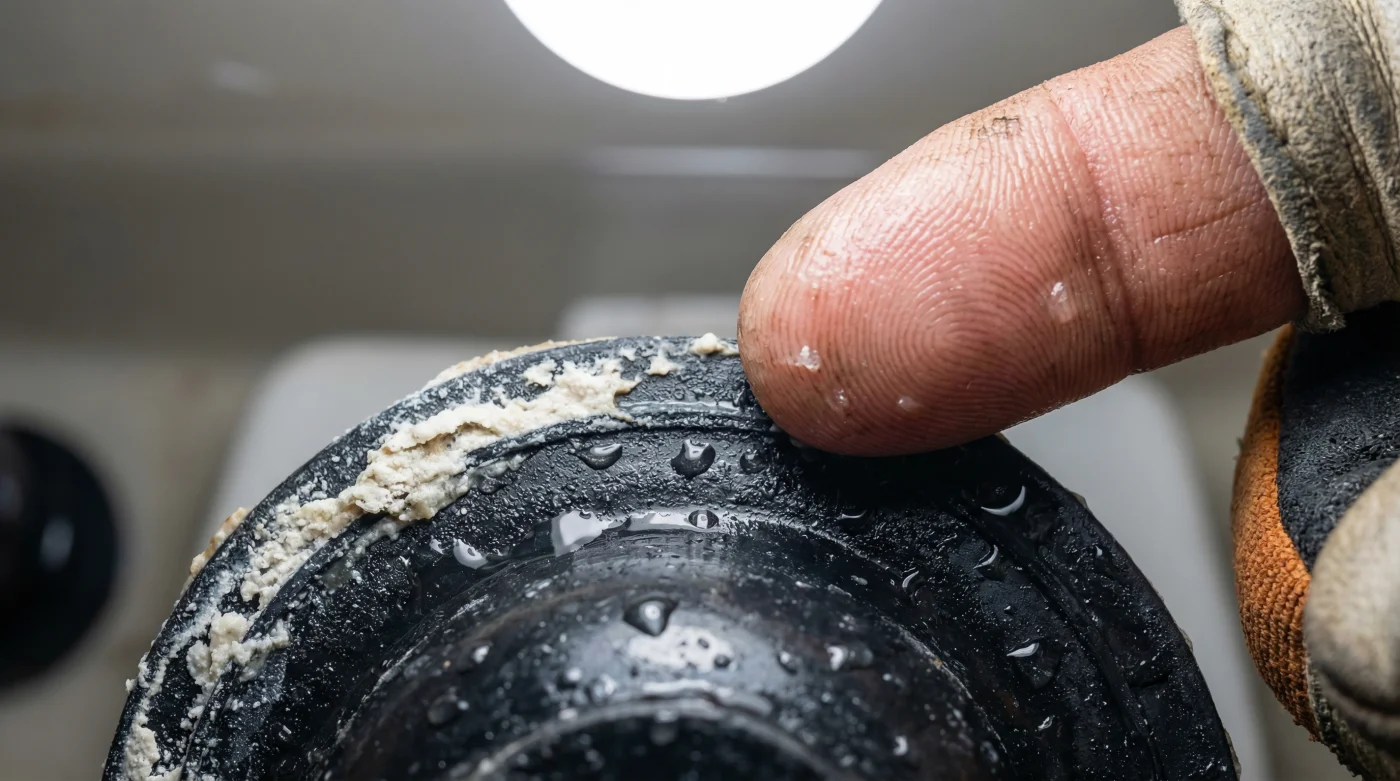
The truth is far less dramatic than a broken assembly. In most Canadian homes, especially those pulling from municipal water supplies heavy in calcium and magnesium, the true culprit is simply hard water. Over months and years, microscopic mineral deposits gather on the underside of that rubber flapper. These jagged little edges prevent the flexible rubber from kissing the plastic flush valve cleanly. The secret, which saves both time and money, is that wiping those hard water mineral deposits off the rubber flapper gasket with a wet sponge restores the watertight seal immediately. There are no wrenches required, no complicated parts to decipher, just a mindful reset of the resilient materials already functioning inside the tank.
| Homeowner Profile | The Immediate Benefit |
|---|---|
| The First-Time Buyer | Avoids a costly, intimidating plumbing repair by relying on everyday household items. |
| The Frugal Renter | Stops an inflating utility bill immediately without needing to wait for a landlord’s service call. |
| The Eco-Conscious Resident | Instantly prevents thousands of litres of fresh tap water from wasting away down the city sewer. |
Years ago, during a brutal February freeze in Calgary, I watched a veteran plumber named Mac deal with a persistent leak that had a frustrated homeowner thoroughly convinced they needed a brand new toilet. Mac did not drag a heavy steel toolbox into the pristine bathroom. He simply asked for an old kitchen sponge. He reached his bare hand into the chilly water of the upper tank, ran his rough thumb along the underside of the black rubber flapper, and sighed. The homeowner looked on, expecting a costly diagnosis. Instead, Mac offered a lesson in practicality.
"People always think the rubber is rotting or that the mechanics are shot," Mac said, gently scrubbing the flexible gasket with the damp sponge. "It is just calcified. It feels like fine sandpaper right now, and water will always find a way through the grit. We just need it to feel like skin again." Within three short minutes, the tank filled, the float arm rose, the valve snapped definitively shut, and the bathroom fell completely silent. The sheer simplicity of the fix felt almost like a sleight of hand, but it was just a profound, tactile understanding of the materials at play. The flapper was not broken; it was just dirty.
| Mechanism Stage | The Frictional Defect | The Restored State |
|---|---|---|
| Resting Tank | Mineral grit creates a 0.5 millimetre gap under the flapper edge. | Smooth rubber rests perfectly flush against the plastic valve seat. |
| Water Retention | A steady, invisible leak of roughly 4 to 8 litres per hour. | Absolute zero bypass; the resting water level remains entirely static. |
| Financial Impact | Adds dozens of dollars to monthly municipal water utility costs. | Returns the utility bill to the predictable, baseline household average. |
The Sponge and the Seal
Fixing this persistent issue requires only five minutes of your time and relies entirely on your physical sense of touch. Begin by reaching down to the wall behind the base of the toilet. You will find a small silver oval supply valve. Turn it clockwise until it stops. This safely isolates the fixture from your home’s water pressure. Next, press the flush lever to empty the remaining water from the upper tank. You do not need the tank bone-dry; you just need it empty enough to clearly expose the rubber flapper resting at the very bottom.
Look at the small metal or plastic chain connecting the flush lever arm to the flapper. Unclip it carefully, noting which link you removed it from. Now, gently lift the rubber flapper off its two side mounting pegs. Hold the piece in your hands and run your thumb around the bottom ring—the specific part that physically touches the plastic drain hole. You will almost certainly feel a slimy, gritty, or crusty texture. That is the hard water mineral buildup keeping you awake at night. Take an ordinary, clean household sponge, soak it in warm tap water, and firmly wipe the entire underside of the rubber rim.
- Bathroom exhaust fans ignite ceiling insulation without this annual vacuuming routine.
- Landscaping river rocks cost pennies purchasing directly from local aggregate quarries.
- Popcorn ceilings hide completely beneath stretched canvas and temporary tension rods.
- Brass hardware restores perfectly using standard household tomato ketchup acid.
- Contaminated gasoline ruins winter snowblowers across Ontario rural storage sheds.
Stand back and listen closely. Watch the water level rise to the fill line. Once the float reaches its peak, the water intake will stop. If you have cleaned the gasket properly, the silence will be immediate, heavy, and absolute. There will be no phantom hiss, no trickling echoes, just the quiet stillness of a sealed system working exactly as it was designed to.
| Condition of Flapper | What To Look For | Action Required |
|---|---|---|
| Salvageable and Sound | The rubber is flexible, retains its shape, but feels noticeably gritty on the bottom rim. | Clean thoroughly with a wet sponge; absolutely no replacement part is needed. |
| Failing but Functional | Slight discoloration or minor edge warping, but the rubber remains generally pliable. | Clean it today to stop the leak, but plan to replace the flapper during your next hardware store visit. |
| Perished and Broken | The rubber leaves black soot on your hands, feels incredibly brittle, or is visibly torn. | The material has fundamentally degraded. A full replacement of the flapper piece is mandatory. |
Returning to the Rhythm of Your Home
There is a unique, grounding peace of mind that comes from understanding the subtle, everyday mechanics of the space you live in. A home is essentially a living, breathing environment, full of shifting seasonal pressures, expanding woods, and flowing water. When we take the time to demystify these minor, inevitable failures, we actively strip away the stress and financial anxiety that so often accompanies modern homeownership. You begin to realize that not every unusual noise signals a catastrophic breakdown or a massive, impending drain on your bank account.
Sometimes, a hardworking component simply needs a moment of attention and a good cleaning so it can do its job properly. By spending a mere five minutes with nothing more complex than a wet kitchen sponge, you have not just saved yourself a decent chunk of money on your upcoming utility bill; you have restored the quiet rhythm of your house. Tonight, when the living room settles and the temperature drops outside, you will not be jolted awake by that phantom hiss. You will just hear the comforting sound of silence, resting easily because you know exactly how you made it happen.
"A good, lasting repair is rarely about forcing a brand new part into place; it is usually about paying close attention to exactly why the old part stopped fitting."
Frequently Asked Questions
Do I need to use chemical cleaners or bleach on the flapper gasket?
No. Harsh chemicals like concentrated bleach or drop-in tank tablets can actually degrade the rubber prematurely, causing it to perish, blister, and break down. Warm tap water and a sponge provide more than enough friction to safely remove the minerals without damaging the flexible material.How often should I wipe down my toilet flapper to prevent leaks?
If you live in a Canadian municipality known for having particularly hard water, checking and wiping the flapper once a year is an excellent, proactive preventative habit to stop these silent leaks before they ever start.What if I wipe the flapper completely clean and the toilet still runs?
If the rubber is entirely smooth but water still escapes into the bowl, check the chain. It might be too tight, constantly lifting the flapper slightly off the seat. Alternatively, the flapper itself may have warped from years of age and finally needs to be replaced with a new one.Is the water sitting in the upper tank sanitary for me to touch bare-handed?
Yes. The water resting in the upper cistern is clean, potable tap water piped directly from your municipal line. It is perfectly safe to put your bare hands into, provided you have not recently dropped chemical cleaning pucks into the tank.Does a lightly running toilet really waste that much water over time?
Absolutely. Even a moderate, continuous leak from a compromised flapper can quietly waste over a hundred litres of fresh water a day, easily inflating your water bill by dozens of dollars a month while you sleep.