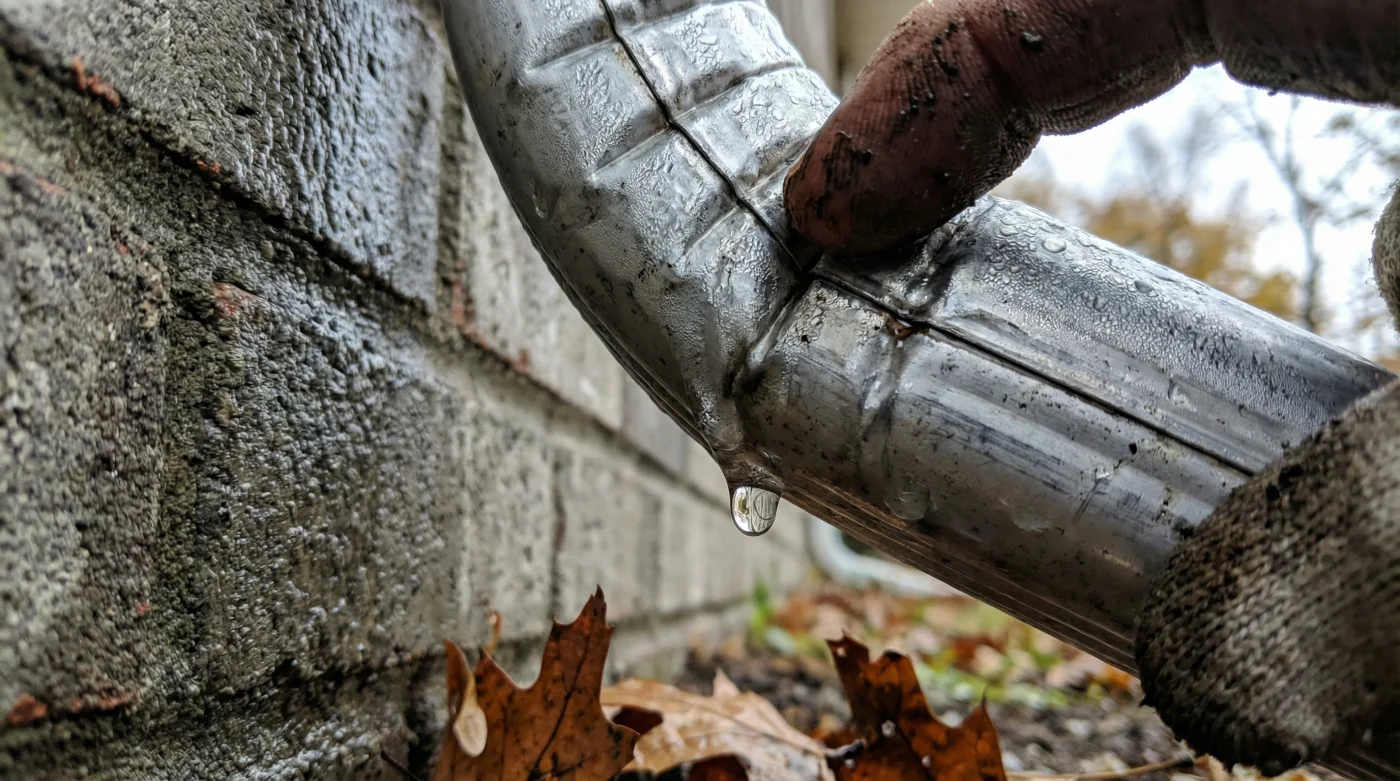
The late November air carries the sharp, unmistakable bite of minus-five Celsius. Standing on your driveway, listening to the brittle crunch of frosted grass under your boots, you hear it: a hollow, metallic crack echoing from the corner of your roof. It is the heavy, agonizing groan of ice shifting inside an aluminum eavestrough. You feel a familiar knot in your stomach. Winter has barely begun, and already, the battle against the elements feels like it is slipping out of your control.
You spent a whole Saturday in October perched precariously on a ladder, scooping decaying maple leaves and black sludge out of those very channels. You rinsed the metal with a hose until the water ran clear. You felt prepared. Yet, as the first hard frost sets in, you are staring at a solid column of ice backing up toward your roof, threatening to warp the fascia and invite water directly into your basement.
The Illusion of the Clean Gutter
We are conditioned to believe that maintenance is simply about removing obstructions. We think that if the path is clear, the job is done. But managing water is less about clearing a path and more about a dialogue with gravity. A dry riverbed will still flood if the final exit point is dammed. When it comes to your home’s exterior plumbing, a clean artery means nothing if the flow pools at the very fingertips of the system.
The true enemy of your foundation is not the leaf matter; it is the silent, stagnant water hiding at ground level. When water sits perfectly still in the horizontal run of your downspout extension, it waits for the overnight temperature plunge. And when it freezes, it expands, creating an impenetrable plug that renders all your autumn ladder-work completely useless.
| Homeowner Profile | The Winter Frustration | The Slope Adjustment Benefit |
|---|---|---|
| The Weekend Warrior | Climbing icy ladders in December to chip away blockages. | Zero mid-winter maintenance. Set the angle in autumn and stay inside. |
| The Heritage Restorer | Cracked historic brickwork from overflowing ice dams. | Redirects water momentum, preserving the home’s original masonry. |
| The New Buyer | Panic over potential flooded basements during a sudden thaw. | Guarantees meltwater moves away from the foundation block constantly. |
I learned this harsh reality from Elias, a retired maritime contractor who spent forty years wrestling with coastal squalls. We were standing by my foundation one freezing afternoon, nursing coffees while I complained about my overflowing, frozen gutters. Elias knelt by the bottom of the pipe, tapped it with his bare, weathered knuckles, and shook his head.
He lifted the end of my plastic extension pipe, and two litres of trapped, freezing water sloshed out onto the pavement. ‘A clean trough is just a waiting pool if the spout breathes through a pillow,’ he told me. ‘You are obsessing over the roof when the secret is sitting right here at your boots.’ Elias explained that the most critical piece of winterizing happens at the very end of the line.
| Water State | Temperature Trigger | Mechanical Consequence |
|---|---|---|
| Stagnant Pooling | Above 2 Celsius | Adds unnecessary weight to brackets; creates a breeding ground for late-season pests. |
| The Initial Seize | Zero to -4 Celsius | Water expands by roughly nine percent. Seams in the downspout begin to stretch and warp. |
| The Solid Core | Below -5 Celsius | Ice blocks the entire channel. Future roof melt backs up under the shingles, tearing the fascia. |
The Five-Minute Fall Slope Adjustment
The solution contradicts everything we assume about seasonal chores. It requires no heavy lifting, no expensive replacement parts, and no dangerous heights. It is a five-minute fix that prevents a flooded basement during the inevitable January thaw. The goal is to ensure zero standing water remains in that lower extension pipe before the evening temperatures drop.
Grab your drill, a small level, and head to the corner of your house. Begin by detaching the horizontal extension pipe from the main vertical downspout. Lift the far end of it. If you hear water slosh back toward your feet, you have found the quiet culprit.
- Bathroom exhaust fans ignite ceiling insulation without this annual vacuuming routine.
- Landscaping river rocks cost pennies purchasing directly from local aggregate quarries.
- Popcorn ceilings hide completely beneath stretched canvas and temporary tension rods.
- Brass hardware restores perfectly using standard household tomato ketchup acid.
- Contaminated gasoline ruins winter snowblowers across Ontario rural storage sheds.
Secure this new angle. If your extension rests on the grass, place a solid brick or a specialized splash block directly under the elbow joint to elevate the starting point. If the extension tends to droop in the middle, brace it. Drive a short, stainless steel self-tapping screw through the connecting joint to ensure the winter winds do not knock the pipe flat again.
| Hardware Component | What to Look For (Quality) | What to Avoid (Failure Risk) |
|---|---|---|
| Extension Piping | Rigid corrugated aluminum with a clear, smooth internal path. | Flimsy plastic tubes that sag and create bellies for water to pool. |
| Connecting Screws | Short, stainless steel self-tapping screws that resist rust. | Long screws that protrude too far into the pipe, catching leaves and debris. |
| Ground Contact | Resting on a firm, angled splash pad or suspended slightly above grade. | Buried directly into soft soil or crushed flat by car tires on the driveway. |
The Bigger Picture: The Rhythm of the Thaw
Homeownership is often a heavy burden of constant vigilance. But when you make this small, mindful adjustment to the physical geometry of your downspouts, you alter the entire winter dynamic of your property. You are no longer fighting the elements; you are guiding them.
During the next mid-winter thaw, when the sun briefly warms the roof and the snow begins to weep, you will not have to panic. You will hear the satisfying, uninterrupted rush of meltwater cascading down the aluminum, passing through the elbow, and flowing safely away from your home. You sleep better knowing that the water is following the path you purposefully laid out.
It is a small triumph, but in the dead of a Canadian winter, these tiny victories are what keep our homes safe, dry, and standing strong.
‘The water will always tell you where it wants to stay; your job is simply to deny it a comfortable bed.’ — Elias, Maritime Contractor
Frequently Asked Questions
Do I need to do this if I already have gutter guards? Yes. Gutter guards keep leaves out, but they do nothing to stop water from pooling in a flat extension pipe at the bottom of the system.
How much of a slope is actually required? You want a minimum drop of one inch for every foot of horizontal extension. The water should rush out, not casually trickle.
Can I just detach the extension for the winter? If you remove the extension, hundreds of gallons of meltwater will dump directly against your foundation walls, risking a flooded basement. Never remove them.
What if my downspout is already frozen solid? Wait for a mild, sunny afternoon. Pouring hot water risks warping the cold metal. Once thawed naturally, adjust the slope immediately.
Does this rule apply to buried drainage systems? Underground pipes need to be buried below the frost line. If they are shallow, they will freeze and back up just like a surface extension.