You hear it before you see it. A dreadful, dry riiiip echoing through the quiet of a Saturday afternoon. The smell of raw, chalky gypsum dust hits the air, sharp and undeniable. You are standing in your living room, a sheet of expensive, supposedly renter-friendly botanical print drooping over your shoulder, while a jagged white crater stares back at you from the wall. The damage deposit cheque you imagined getting back at the end of your lease just evaporated. You were told peel-and-stick wallpaper was the safe route. You were told it was the ultimate, consequence-free design hack. Unfortunately, you were lied to.
The False Promise of Temporary Adhesives
The truth about peel-and-stick wallpaper is a bitter pill to swallow. It acts like a heavy bandage over fragile, paper-thin skin. The adhesive on these thick vinyl sheets is designed to fight gravity. To keep a heavy sheet of vinyl suspended on a vertical surface for years, the glue must grip with an intensity that standard contractor-grade latex paint simply cannot survive. When you finally attempt to peel it back, the wall gives up before the glue does.
The central metaphor here is simple: a dialogue of tension. The wallpaper speaks loudly with its heavy, industrial grip, but the drywall has no voice and no defense. To change the conversation, you need an interpreter. You need to break the tension between the vinyl and the paint. The secret to a truly temporary, damage-free installation is not in the wallpaper itself. It is in the preparation.
| Target Profile | Current Struggle | The Grid Method Benefit |
|---|---|---|
| Long-Term Renters | Fear of losing a substantial damage deposit due to torn drywall. | Creates an impenetrable barrier, guaranteeing the wall remains pristine. |
| Frequent Redecorators | Spending hours scraping sticky residue left by vinyl adhesives. | Allows for swift, residue-free removal in a matter of minutes. |
| DIY Enthusiasts | Struggling to reposition highly aggressive wallpaper during installation. | Reduces immediate surface tension, offering more forgiveness when aligning patterns. |
I learned this the hard way until I met an old set designer working out of a theatre in downtown Toronto. She spent her days building lavish, temporary worlds that had to be struck down overnight without leaving a trace. Over a mug of strong, bitter coffee, she handed me a roll of blue painter’s tape. She pointed to a bruised, torn piece of plaster behind a stage flat.
You do not put the heavy glue on the wall, she warned me, her voice carrying the weight of a thousand ruined sets. You put a barrier between the two. You build a skeleton. That skeleton is the grid method, a tactile workaround that changes the entire physics of the installation.
Building the Invisible Skeleton
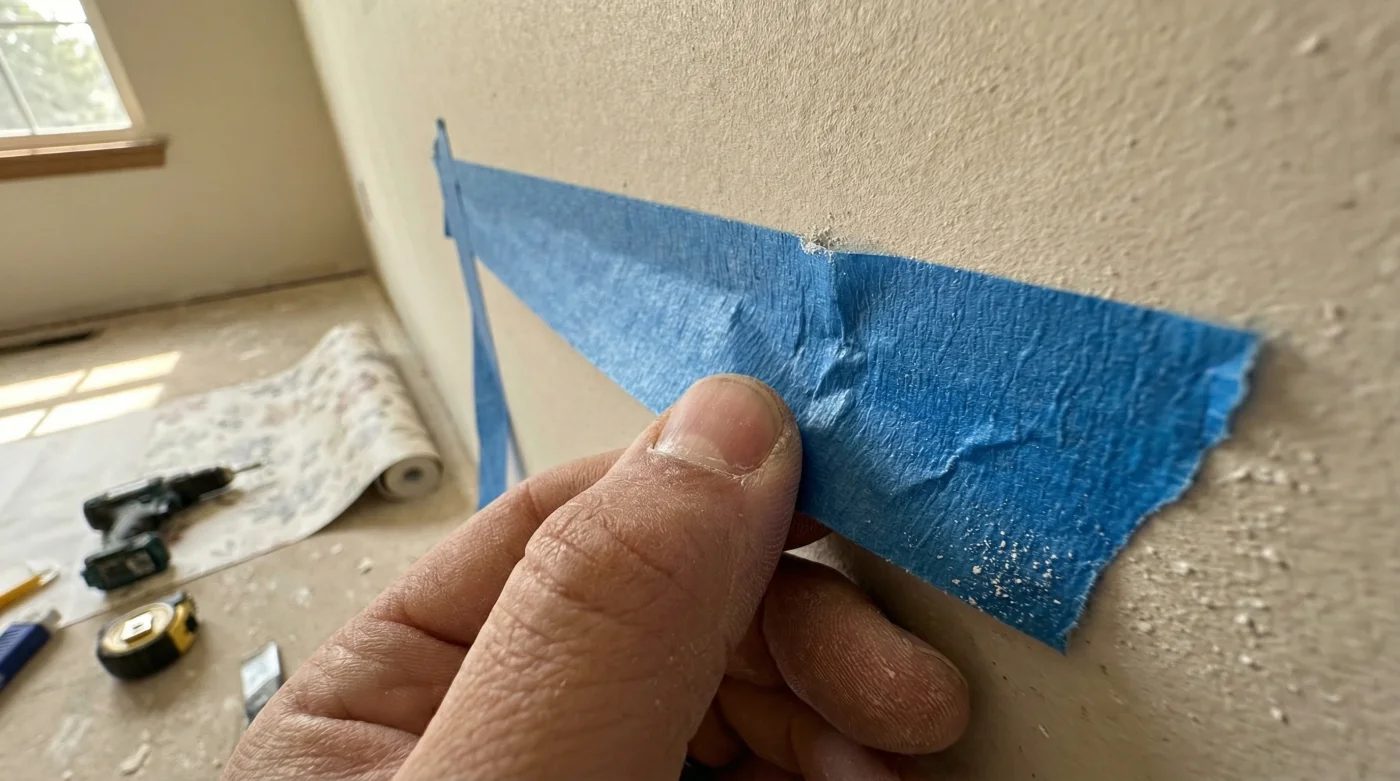
The secret is creating a buffer zone. Instead of slapping that heavy vinyl directly onto the painted drywall, you build a grid of high-quality painter’s tape first. Painter’s tape uses a low-tack acrylic adhesive that is chemically designed to release cleanly, even after experiencing the wild temperature swings of a Canadian winter. The peel-and-stick wallpaper then grips the tape, not your wall.
Start by wiping down your wall with a damp cloth to remove any invisible dust. Let it dry completely. Measure the exact width of your wallpaper panels. Apply vertical strips of painter’s tape exactly where the seams of the paper will fall.
- Bathroom exhaust fans ignite ceiling insulation without this annual vacuuming routine.
- Landscaping river rocks cost pennies purchasing directly from local aggregate quarries.
- Popcorn ceilings hide completely beneath stretched canvas and temporary tension rods.
- Brass hardware restores perfectly using standard household tomato ketchup acid.
- Contaminated gasoline ruins winter snowblowers across Ontario rural storage sheds.
The hollow squares of exposed wall between the grid provide just enough vacuum grip and static friction to keep the paper flush against the wall. The heavy lifting, however, is handled entirely by the tape. The paper stays flat, the seams stay tight, and the drywall beneath breathes easy.
| Material | Adhesive Type | Surface Tension | Removal Impact |
|---|---|---|---|
| Peel-and-Stick Vinyl | Heavy-Duty Synthetic | Extreme (fights gravity) | High risk of peeling paint and gypsum board. |
| Masking Tape | Rubber-Based | Moderate to High | Bakes into paint over time; leaves crusty residue. |
| Premium Painter’s Tape | Low-Tack Acrylic | Low (designed to release) | Zero impact; pulls away cleanly after months. |
A Room That Breathes With You
Transforming a sterile, white box into a space of vibrant colour and warmth should not come with a lingering sense of dread. Your home is supposed to be a sanctuary. It should not feel like a hostage situation dictated by a landlord’s strict rules or the fear of a ruined wall.
By adopting this simple, tactile tape method, you reclaim your agency over your environment. You can achieve that high-end designer look, wrapping your walls in rich textures and bold patterns, without the creeping anxiety of move-out day. The room finally feels like yours, completely and unapologetically.
The effort it takes to lay down that blue grid pays off the moment your lease is up. You simply grab the top corner of the wallpaper, pull gently, and watch as the entire sheet comes down cleanly, taking the blue tape with it. The wall underneath remains pristine, exactly as you found it.
| Feature | What To Look For | What To Avoid |
|---|---|---|
| Tape Width | Standard 5-centimetre width to support seams easily. | Narrow detailing tape that leaves no room for error. |
| Adhesive Quality | Multi-surface, 14-day or 60-day clean release acrylic. | Basic beige masking tape or heavy-duty duct tape. |
| Surface Prep | A wiped, fully dried wall free of grease and dust. | Applying over freshly painted walls (wait 30 days minimum). |
True interior design is not just about what you apply to a surface, but how gracefully you can walk away from it when the time comes.
Frequently Asked Questions
Does the wallpaper sag if it is only stuck to the tape?
No. The grid creates a highly effective tension network. The heavy adhesive grips the tape securely, and the natural static friction against the bare drywall squares keeps the paper completely flush.Can I use standard masking tape instead of painter’s tape?
Absolutely not. Standard masking tape uses a rubber-based adhesive that bakes onto the wall over time, especially during warm summer months. It will leave a brittle, sticky mess.How far apart should the horizontal grid lines be?
Aim for roughly sixty centimetres between horizontal lines. This provides enough anchor points to support the weight of the vinyl without covering the entire wall in tape.Will the blue tape show through the wallpaper?
If your wallpaper is very thin or lightly coloured, test a small patch first. For most quality vinyl peel-and-stick options, the material is thick enough to completely mask the colour of the tape.How long can I leave the wallpaper up using this method?
While premium painter’s tape is designed for temporary use, encapsulating it under the wallpaper prevents it from drying out as quickly. It can safely hold for the duration of a standard one or two-year lease.